The consumer electronics and home audio market has long faced a persistent challenge: delivering truly immersive, multi-dimensional home theater audio within the spatial constraints of modern apartments, urban bedrooms, and mid-sized living spaces. For years, manufacturers relied heavily on digital processing tricks to simulate height channels in compact form factors, often sacrificing spatial accuracy or dialogue fidelity in the process. Sonos, a dominant force in multiroom wireless audio, previously encountered this limitation with its widely popular Beam and Beam Gen 2 models. While those units excelled in form factor and baseline audio performance, they lacked physical up-firing drivers capable of replicating authentic overhead spatial effects.
Addressing this long-standing acoustic gap, Sonos has officially introduced the Sonos Beam Ultra, priced at $699 (£699). Designed specifically to target urban dwellers and users with mid-sized entertainment setups, the new soundbar integrates a completely overhauled acoustic architecture, featuring dedicated upward-firing drivers, AI-assisted speech enhancement, and deep integration with the company’s next-generation operating system, Sonos 27. This comprehensive review examines the engineering, performance metrics, market implications, and ecosystem integration of the Sonos Beam Ultra to determine its standing in the competitive premium audio landscape.
Evolution of the Beam Series and Market Positioning
To understand the engineering significance of the Sonos Beam Ultra, one must examine the evolutionary trajectory of the Sonos soundbar lineup. The original Sonos Beam debuted to widespread critical acclaim for bringing smart capabilities and respectable television audio to smaller living rooms. The subsequent Beam Gen 2 introduced virtual Dolby Atmos support via enhanced processing on a single center tweeter, four mid-woofers, and three passive radiators. However, reviewers and audiophiles consistently noted that virtualized height channels could not fully match the spatial immersion of physical vertical drivers.
Priced at $699, the Sonos Beam Ultra sits comfortably between budget-conscious standalone units and ultra-premium flagships like the Sonos Arc Ultra, which commands a $1,099 price tag and utilizes advanced "Sound Motion" woofer technology designed for cavernous living rooms. By packing advanced acoustic hardware into a chassis barely wider than its predecessor, Sonos has engineered the Beam Ultra to serve as the definitive middle ground for consumers seeking cinematic Dolby Atmos without overwhelming a standard bedroom or apartment layout.
Acoustic Architecture and Hardware Upgrades
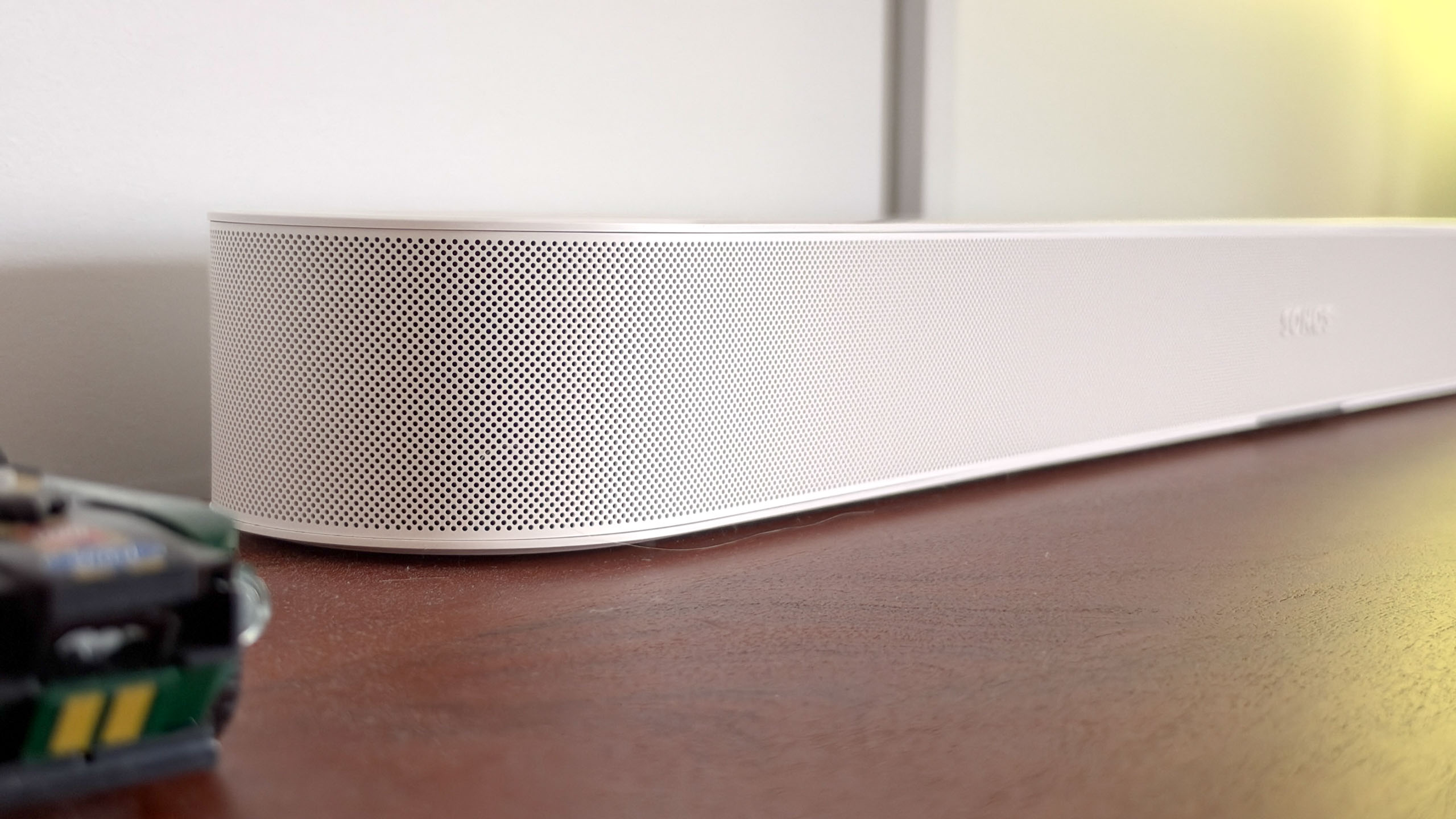
The most significant upgrade in the Sonos Beam Ultra lies entirely within its internal hardware configuration. Transitioning away from the single-tweeter design of previous generations, the Beam Ultra houses a total of nine Class-D amplifiers powering five distinct tweeters—including two specifically angled upward into directional horns—and four custom-tuned mid-woofers.
This acoustic redesign shifts the soundbar from a simulated multi-channel setup to a true 7.2.1-channel configuration capable of genuine vertical audio dispersion. Testing with reference-grade Dolby Atmos content, such as high-velocity aerial sequences, demonstrates that audio cues no longer merely expand horizontally across the display console; instead, they cleanly scale up the vertical plane, sweeping across upper wall boundaries and ceiling surfaces. This performance represents an authentic physical multi-dimensional sound field rather than a software-driven illusion.
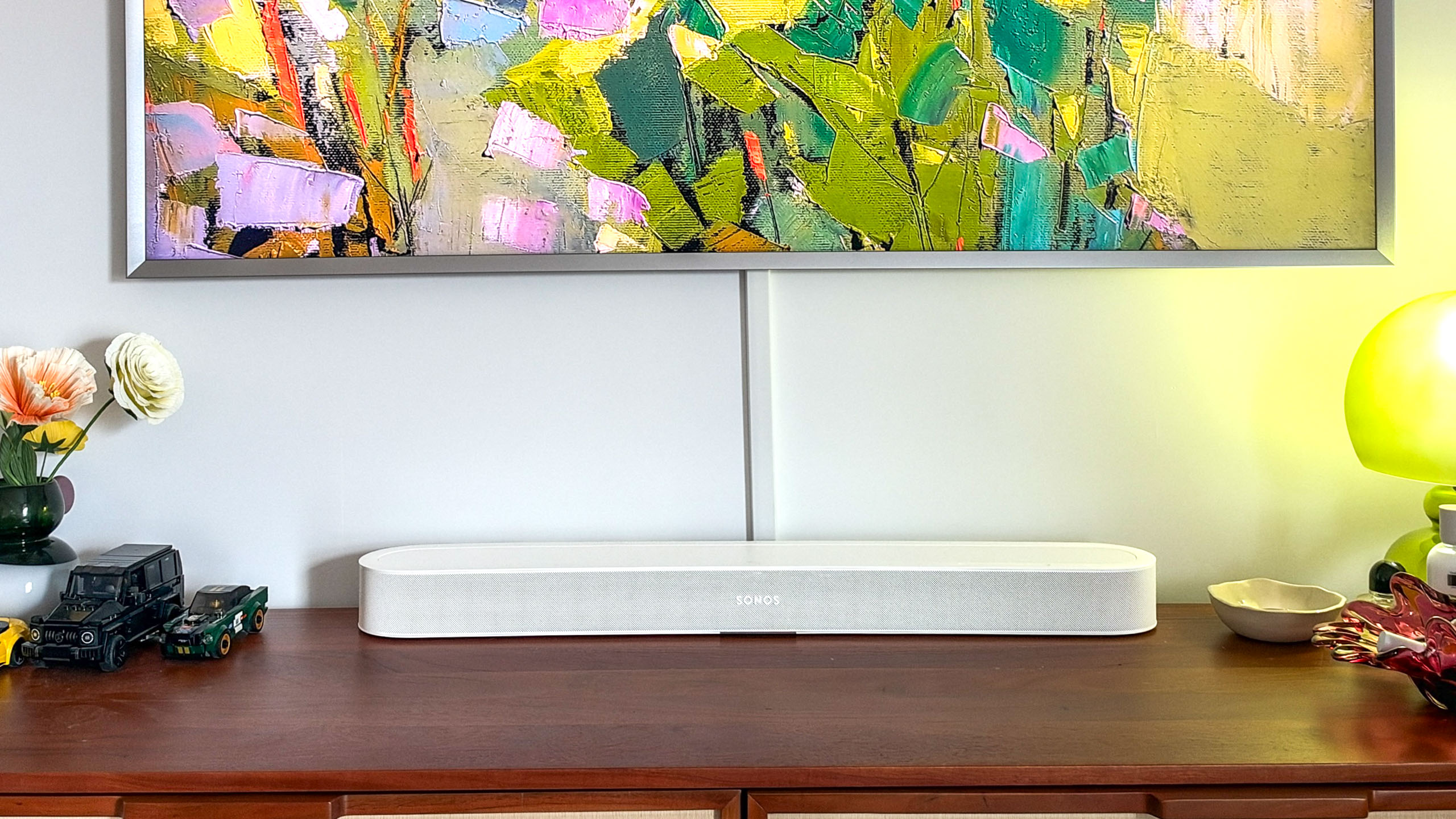
Furthermore, Sonos has integrated an advanced AI-assisted Speech Enhancement algorithm. In dense cinematic mixes featuring competing orchestral scores and aggressive sound effects, spoken dialogue remains firmly centered, isolated, and exceptionally crisp. This technical achievement rivals the dialogue processing benchmarks set by industry competitors like Sony, solving a frequent consumer complaint regarding unintelligible movie dialogue on flat-panel television speakers.
Design, Aesthetics, and Physical Integration
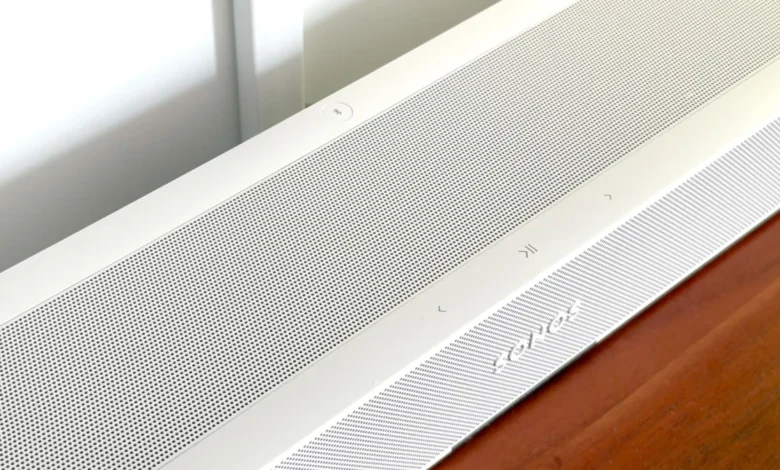
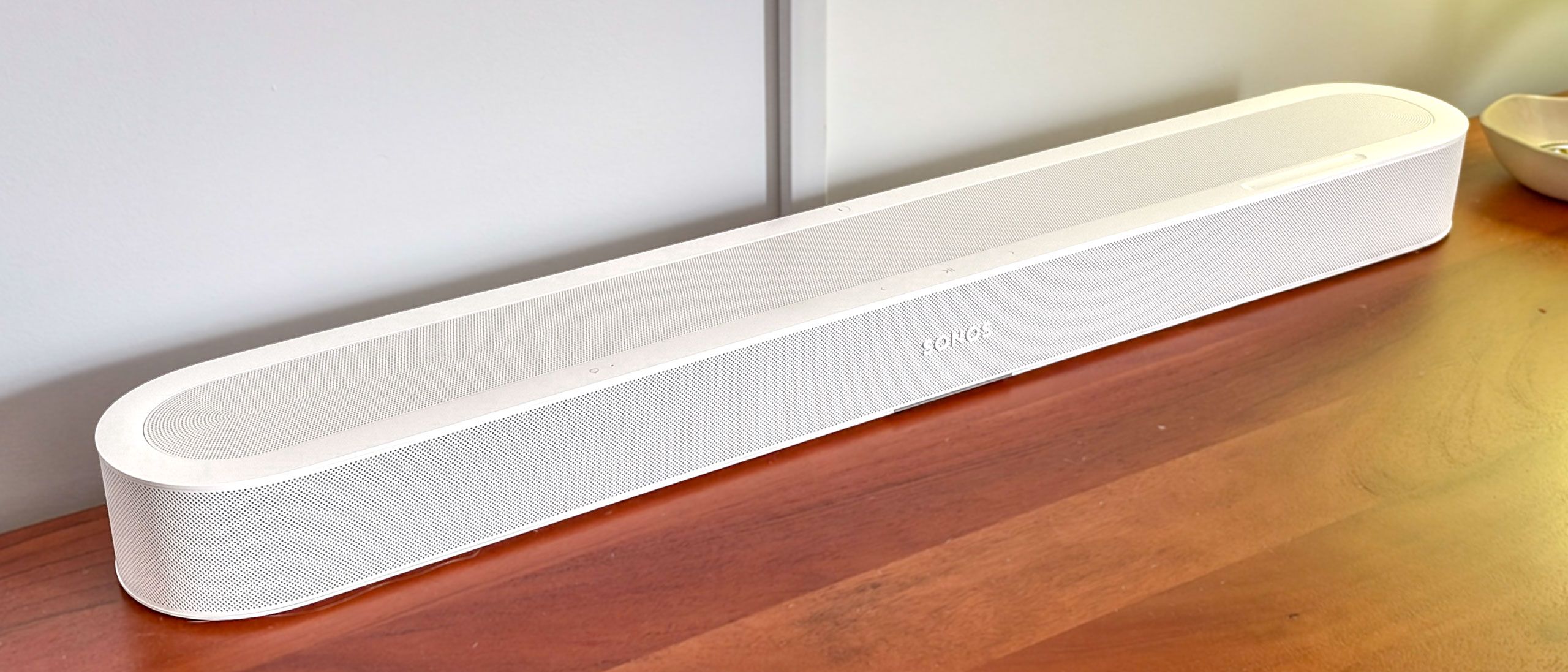
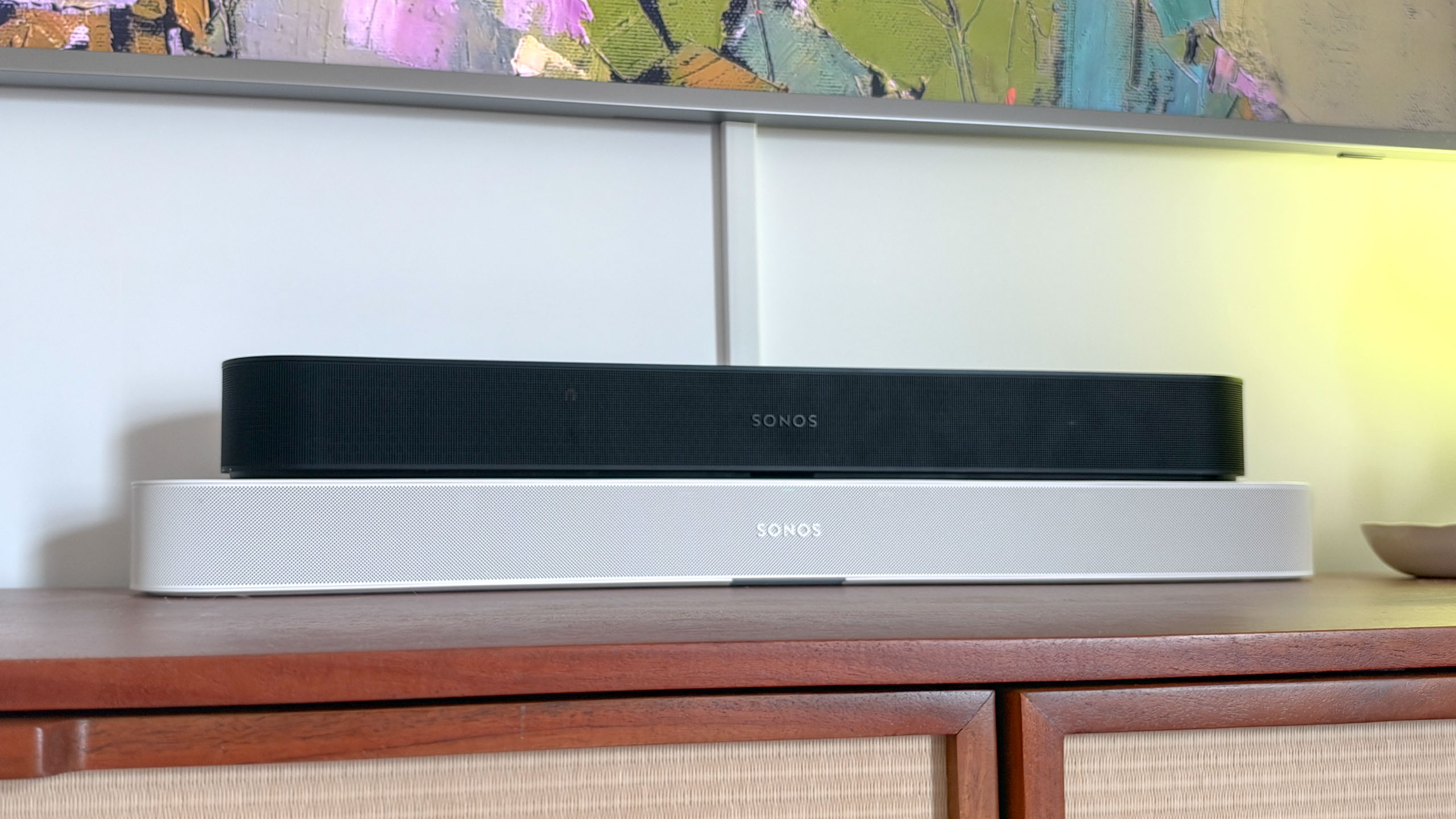
Maintaining Sonos’s signature minimalist industrial design ethos, the Beam Ultra features a matte finish and a uniform micro-perforated acoustic grille. Standing at a modest 2.5 inches tall, the soundbar maintains a slender profile designed to sit cleanly beneath modern television bezels without obstructing infrared remote sensors or the bottom edge of the display. With a slightly widened footprint tailored to anchor 55-inch and 65-inch television displays, the unit weighs approximately 6.35 pounds and is available in standard matte black and white colorways.
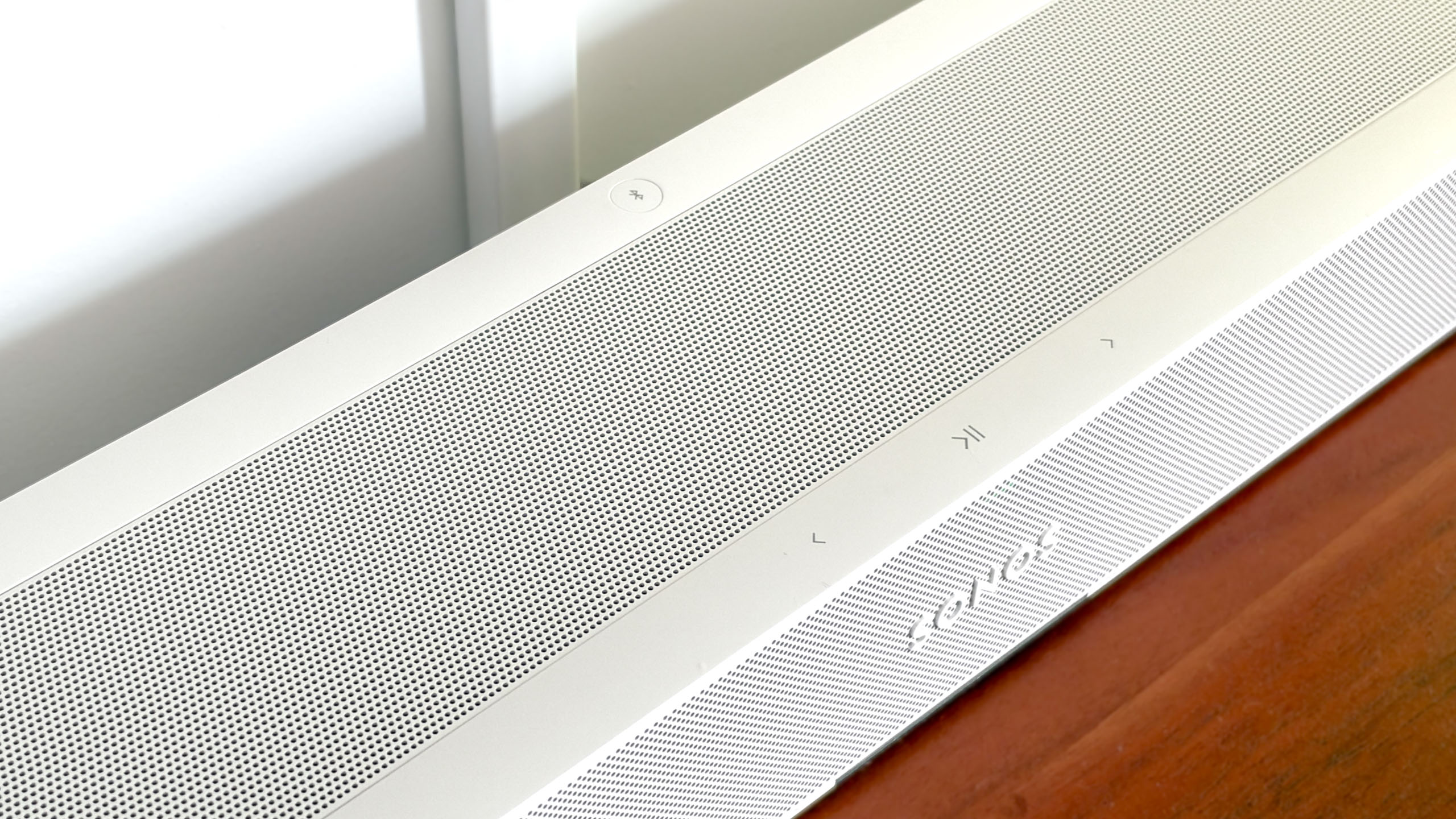
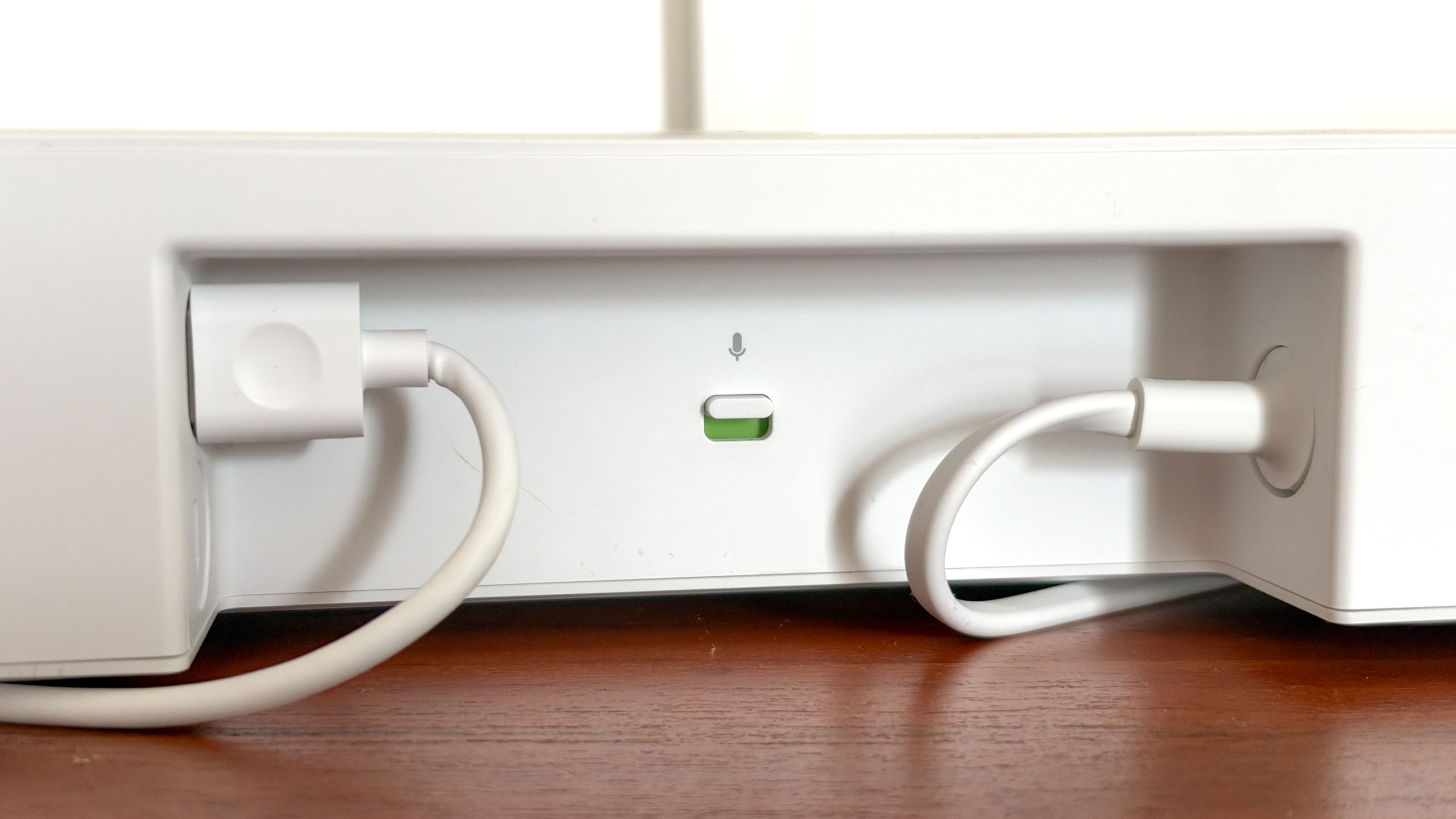
Physical connectivity remains deliberately minimalist, adhering to Sonos’s streamlined philosophy. The rear panel features a single HDMI eARC port for television integration, alongside a USB-C port that accommodates line-in and Ethernet connections via optional adapters. The unit supports Wi-Fi 6, Bluetooth 5.3, Apple AirPlay 2, and Spotify Connect, ensuring broad compatibility across modern mobile and smart home ecosystems.
Streamlined Setup and Calibration
Installation complexity has historically been a barrier for high-end home theater setups, but the Beam Ultra streamlines this process significantly. Connecting the soundbar typically requires only two physical cables: the power lead and the included high-speed HDMI eARC cable.
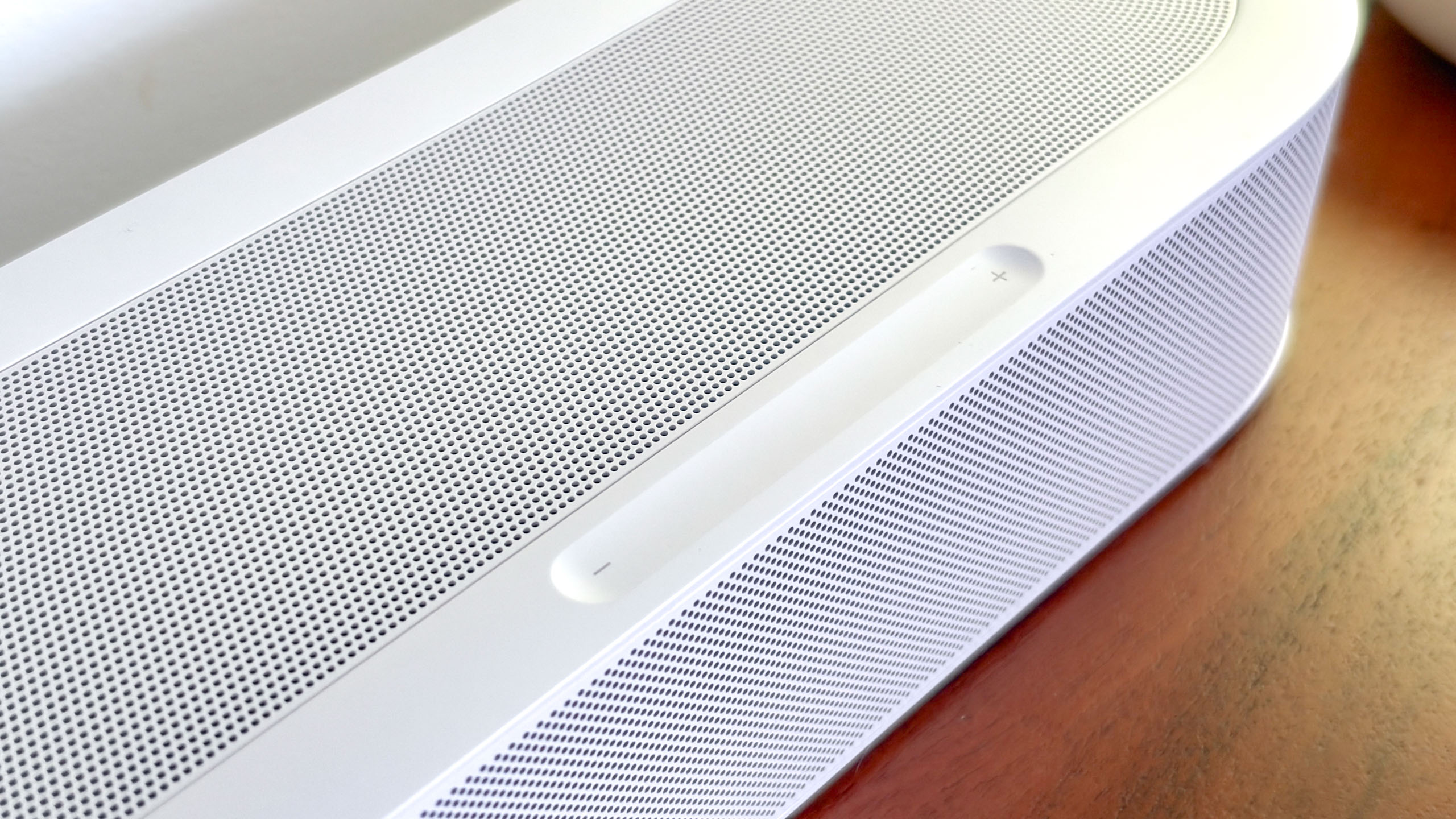
Upon powering on, the Sonos mobile application automatically detects the new hardware. Crucially, Sonos has updated its Trueplay room calibration software to include a fast-track automated routine. Utilizing the soundbar’s built-in far-field microphones, the system completes acoustic room calibration autonomously in approximately 30 seconds, bypassing the manual phone-waving calibration routines required by earlier generations. While manual calibration options remain available for advanced users, the automated process provides immediate, optimized room correction for standard living spaces.
Modular Surround Sound and Ecosystem Integration
A core value proposition of the Sonos ecosystem has always been modular expandability. While the Beam Ultra functions effectively as a standalone unit, it features dynamic pairing capabilities with other Sonos hardware. Users can wirelessly assign portable speakers—such as the Sonos Play series—as temporary rear surround channels over a low-latency Wi-Fi connection. This capability allows users to configure an impromptu, cord-free surround sound system for movie viewing and seamlessly revert the auxiliary speakers to independent multiroom audio duties afterward.
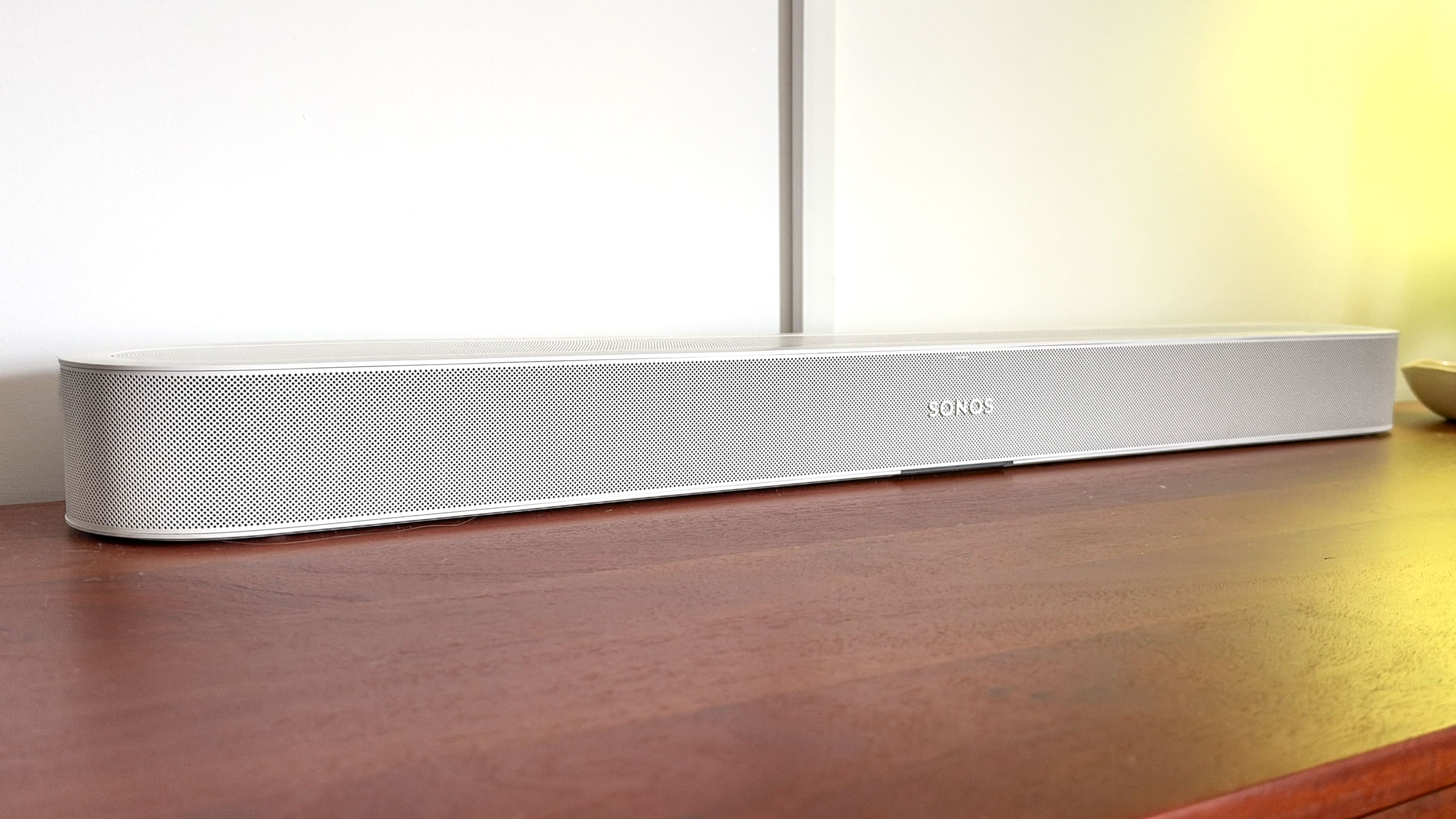
This hardware flexibility is tied directly to the rollout of Sonos 27, the company’s next-generation operating system. Following a challenging software transition period in preceding years, Sonos 27 introduces a redesigned interface, enhanced device navigation, and expanded smart home integrations. The operating system enables seamless multiroom audio routing—allowing, for instance, analog audio from a turntable connected to a Sonos Era 100 in a living room to be streamed directly to the Beam Ultra in a bedroom. Additionally, the software supports private audio handoffs to compatible headphones, such as the Sonos Ace Ultra, eliminating complex Bluetooth pairing procedures.
Comparative Market Analysis
When evaluated against competing products in the global audio market, the Sonos Beam Ultra occupies a distinct performance tier.
- Sonos Beam Gen 2 ($499): Retained as a budget-friendly alternative, the Gen 2 relies on virtual Atmos processing and a simpler 5.0 layout, making it suitable for smaller displays and tighter budgets. However, it lacks the physical height channels and expansive vertical dispersion of the Ultra.
- Sonos Arc Ultra ($1,099): Engineered for large-scale home theaters, the Arc Ultra features fourteen drivers and Sonos’s proprietary Sound Motion technology. While its deep sub-bass extension and immense soundstage are unmatched, its acoustic output can easily overpower standard-sized bedrooms and apartments.
- Bose Smart Soundbar 600 ($499): A primary competitor offering physical up-firing Dolby Atmos drivers in a compact chassis at a lower price point, though lacking the expansive ecosystem and modular flexibility of Sonos.
- Sony BRAVIA Theater Bar 7 ($869): An attractive option tailored for gamers and Sony television owners, featuring dedicated HDMI 2.1 passthrough ports and advanced TV-integration features, albeit at a higher price than the Beam Ultra.
Limitations and Trade-Offs
Despite its extensive engineering improvements, the Sonos Beam Ultra presents a few notable compromises that prospective buyers should consider:
- Stereo Music Playback: While Dolby Atmos and spatial audio tracks sound exceptional, traditional stereo music streaming via Spotify Connect or Sonos Radio yields performance comparable to the Beam Gen 2. Users prioritizing dedicated music listening with wide stereo separation and robust midrange punch will generally achieve better results from a dedicated pair of bookshelf speakers, such as the Sonos Era 100.
- Single HDMI Port and Lack of Passthrough: Adhering to minimalist design principles, the Beam Ultra features only one HDMI eARC port and omits auxiliary HDMI inputs. Consequently, all external devices—including gaming consoles and media players—must route directly through the television. For users managing complex entertainment centers with limited HDMI 2.1 television ports, the lack of onboard passthrough can present connectivity bottlenecks.
- Premium Price Point: At $699, the Beam Ultra represents a significant financial investment for a compact soundbar, placing it near the upper tier of mid-size audio solutions.
Broader Implications and Industry Outlook
The release of the Sonos Beam Ultra reflects a broader industry trend toward miniaturizing high-end acoustic technologies without compromising spatial immersion. As urban housing density increases and living spaces become more compact, consumer demand has shifted away from bulky, multi-speaker AV receivers toward streamlined, intelligent single-body solutions.
By integrating dedicated physical up-firing drivers, AI-driven dialogue clarity, and robust ecosystem software, Sonos has addressed the primary technical limitations of previous compact soundbars. While connectivity constraints and music playback performance indicate room for future refinement, the Beam Ultra successfully bridges the gap between cinematic spatial audio and everyday home aesthetics. For consumers operating within mid-sized spaces who prioritize immersive movie viewing and seamless smart home integration, the Sonos Beam Ultra establishes a formidable new benchmark in the premium soundbar market.
Related posts: